

Table of Contents
Introduction
Food Dreams and the Birth of the Raw Food Revolutionary
The Celebrity Romance: Age Difference, Hollywood Debacle, and Controversy
The Playfood Business: Building an Empire out of a Plant-Based Cheese Brand
Business Fallouts and Legal Issues: The End of Playfood
The Kansas City Story: Starting Again at Füd
Hiding from the Limelight: The Legacy and Present Day Views
8 Interesting FAQs
Conclusion
Complete Article
Introduction
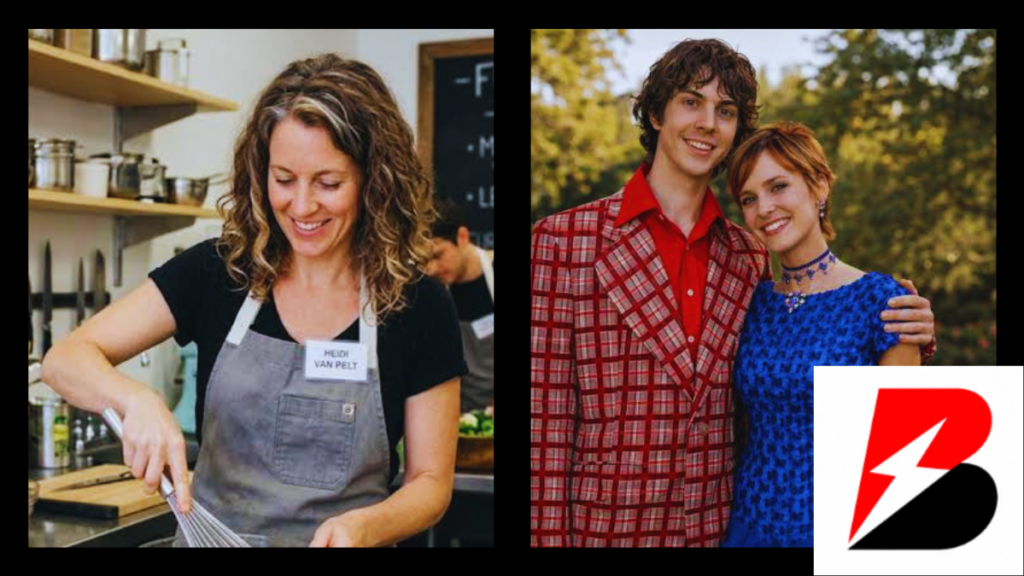
Heidi Van Pelt Way before vegan cheese took center stage in grocery stores all throughout North America, there was a team of visionary chefs trying to create their own revolution out of cashew blends, natural cultures, and fresh ingredients. One of the prominent people in the initial wave of vegan food manufacturing was Heidi Van Pelt, yet her name became better known to the tabloid press rather than the restaurant critics due to numerous Hollywood rumors, lawsuits involving the young man’s trust fund, and a very dramatic marriage that brought entertainment industry much buzz in the early two thousands.
After the announcement of a marriage of Taran Noah Smith—a seventeen-year-old former child actor famous for starring as Mark Taylor in the eight seasons of the popular ABC sitcom Home Improvement—and Heidi Van Pelt, who is a thirty-three-year-old vegan chef, in April 2001, a huge media fuss erupted in no time. The fact that a recently retired young minor got married to an adult woman and decided to go into business together caused a real media circus which hid many aspects of a very interesting story.
The image of Heidi Van Pelt is formed under the influence of decades of biased media coverage that ignores her real career path. She was not merely the victim of a notorious public scandal but a passionate and determined chef who made groundbreaking work in the sphere of raw and vegan cuisine decades before these diets became trendy and popular. Thus, her story begins in underground culinary experiments and then proceeds through the path of successful executive experience, followed by legal disputes and ending up with modest regional entrepreneurship.
Ambitions of the Culinary Specialist and the Birth of a Pioneer of Raw Foods
Before her scandal hit national headlines and brought the name of Van Pelt onto the list of celebrities mocked by late night TV shows, she was actively involved in the development of the holistic food movement in the late 1990s. Growing up with a healthy lifestyle, Van Pelt knew that culinary schools did not pay much attention to the philosophy of eating raw, plant-based, and ethically produced meals. At that time, the work of a chef of raw foods entailed deep technical knowledge of the processes of fermentation, dehydration of nuts, and flavoring of meals.
Heidi Van Pelt devoted her first years of professional experience to creating unique methods of turning raw and unpasteurized seeds and nuts into tasty meals similar to the traditional ones. Most of all, she focused on the processing of cashews by using specific fermentation procedures to create the texture, taste, and structure of cultured pastes that resembled conventional cheese. As for the time when vegetarian diets had not become popular yet and only soy and oil substitutes were available, her approach was innovative.
Working among alternative food circles in California, Van Pelt developed the reputation of a skillful chef and a strong believer in the food philosophy. She worked as a private chef, nutritionist and promoter of the philosophy of raw foods. Being sure that food was the means of healing as well as culinary art, Heidi Van Pelt was actively involved in the formation of the culinary trend of the future.
High-Profile Union: Age Differences, Hollywood Controversies and Public Scrutiny
The course of Van Pelt’s existence changed completely after her meeting with Taran Noah Smith in 2000. Smith was just out of eight years of growing up in front of millions of people, being one of the stars of the TV show Home Improvement that aired on ABC between 1991 and 1999, where he played the youngest son of the protagonist, the character played by Tim Allen. Having quit his acting career at the age of sixteen, Smith had been searching for a way to become independent and pursue a career of an environmental activist.
Very soon the two became friends and started dating, sharing common interests in veganism and environmental activism. However, the union of the two people raised immediate concerns of Smith’s parents, Candy and David Bennici and also caused great surprise among tabloids. On April 27, 2001, the couple got married, but Smith was only seventeen years old at that moment while Van Pelt was thirty-three. Being still a minor at the time when he started a relationship with the girl, Smith’s family tried to take control of their son’s financial affairs, resulting in a public quarrel over the boy’s possessions.
Smith’s case turned into a news story across the country when he accused his parents of spending his $1.5 million trust fund on buying themselves a luxurious mansion. His parents denied those allegations, claiming that the money was held safely in court-protected trusts and could not be accessed until Smith became eighteen. In their turn, Smith’s parents accused Van Pelt of influencing their son in order to gain access to Smith’s trust fund money when he would come of age. The conflict in the Marin County courts concluded with the preservation of the trust fund untouched until Smith reached his eighteen years of age in April 2002. Years later, Smith stated that his parents just tried to help him in the troublesome time of rebellion against his parents.
The Playfood Enterprise: Starting a Business with the Mission of Vegan Cheese Empire
After Smith became of legal age and could access all the money he had earned during the time he spent acting, Van Pelt and Smith decided to merge both their money and their enthusiasm into one business. In 2005, Playfood – a company that manufactures food products and operates vegan restaurants – came to life. Playfood was intended to popularize Van Pelt’s non-dairy recipes for cheese products through the creation of such food products as gourmet vegan cheese, raw spreads, and organic packaged meals.
The business operations started at their home and then were extended to commercial facilities. The first product line offered by Playfood was made of cashews and cheese substitutes that got good reviews among vegan food critics. While Van Pelt was responsible for the development of recipes, Smith was dealing with administrative and financial sides of the company using his money to buy equipment for manufacturing.
In the beginning, Playfood was a successful combination of passion and financial interest. It provided food for many high-profile Hollywood parties where people could see celebrities eating raw vegan dishes. In addition, it proved that it is possible to convert the niche food into consumer packaged products. However, soon, the strain of growing the business and being married to each other started to affect negatively this business.
Company Deterioration and Legal Problems: The Demise of Playfood
By late 2006, the marriage of Van Pelt and Smith had reached a state where it was beyond redemption. Conflicts in the personal lives of Van Pelt and Smith spilled into the business side of Playfood, creating conflicts about control and ownership. Finally, on February 2, 2007, Van Pelt and Smith officially filed for divorce, starting a legal battle for possession of the company’s intellectual and tangible assets.
This legal conflict revolved significantly around the issue of proprietary rights to the recipes and processing methods of Playfood products. Van Pelt argued that because she was the creator of the formulations of the cashew cheeses and developed them as a culinary artist, she retained the intellectual property rights to the product line. As the one who funded the establishment of the company through his trust fund money, Smith claimed ownership of the company and the tangible assets.
As far as corporate ownership is concerned, eventually the courts took the side of Smith. However, this victory did not last long. Playfood could not continue because there was no active culinary leader and new ideas. High operational expenses, debts, and problems with distributing products led to closure of the business. Residential property in Los Angeles used by the business as its initial base fell under foreclosure, which marked the tragic ending of high-risk entrepreneurial activity.
The Kansas City Chapter: Establishing Yourself as a Chef at Füd and Culinary Resurgence
Having dissolved the marriage and closed down Playfood, Heidi Van Pelt decided to leave all connections with Los Angeles completely, finding a new place to live far away from the city’s attention and gossip. Having moved to the Midwest, Van Pelt found herself in Kansas City, Missouri, where her culinary abilities could be utilized without being overshadowed by her previous celebrity status.
At the same time, Van Pelt managed to create Füd – an eclectic and cozy raw vegan restaurant located in Westside district of Kansas City. The restaurant became one of the city’s best-known places for local vegetarians and vegans as well as other people interested in delicious plant-based dishes, who came to try various comforting and flavorful delicacies made of healthy foods. Van Pelt managed to create some truly famous dishes there using her cashew cheese recipes. For instance, among such dishes were vegan jackfruit carnitas, raw house-made nacho cheese, and many comfort foods recreated using organic ingredients.
Füd was famous in Kansas City for several years and even received the name of the pioneer plant-based restaurant. Customers appreciated the great flavors of Van Pelt’s dishes, recognizing her incredible technical skills in making raw food. However, behind the success there appeared some internal disputes between the ownership and employees of the restaurant. Sometime around 2017, the disputes between them started to affect customers. As a result, Füd became involved in a serious local scandal, which was even solved with police interference.
Fading into the Shadows: Legacy and Modern Reflections
In the aftermath of all these events, Heidi Van Pelt essentially withdrew herself from the public sphere. Contrary to the many contemporary chefs who actively use social media to create a personal brand, Van Pelt preferred a more secluded lifestyle by refraining from any public culinary administration and business dealings.
Reflecting upon Van Pelt’s professional life, it is necessary to mention that she plays a rather interesting role in the history of the modern culinary world and culture. First of all, Heidi Van Pelt was certainly way ahead of her time being an advocate of plant-based cuisine. Her experiments with making cashew cheese that she started to perform in the early 2000s preceded the emergence of the multi-billion-dollar plant-based dairy industry that exists nowadays.
At the same time, Heidi Van Pelt is inseparably associated with one of the most scandalous and popular tabloids of the early 2000s. Indeed, the combination of her child stardom, inherited trust funds, huge age gap between spouses, and ambitious business plans created quite a storm that could not be maintained. Thus, the biography of Heidi Van Pelt can be considered as a unique case study of innovation in the midst of sensationalism.
Unique FAQs
What is Playfood?
Playfood is a company that produces non-dairy cheese and raw food catering in California in 2005. The company has been founded by Heidi Van Pelt and Taran Noah Smith and they have become popular because of producing cheese from cashew nuts.
Why did Taran Noah Smith file a suit against his parents?
Taran Noah Smith went into court battle with his parents over possession of his trust fund worth $1.5 million, accrued during his acting in the television series Home Improvement. The parents wanted to keep the money secure until he would reach 18 years of age in order not to ruin the young man’s future because of their mismanagement, whereas Smith wanted to have access to the money sooner. Smith eventually forgave his parents for their actions saying that they just wanted to protect him.
Why did Playfood go out of business?
Playfood ceased its activities due to the separation of Heidi Van Pelt and Taran Noah Smith in 2007. A conflict about recipe patents, ownership of the business, and property division turned the company’s activities impossible without Van Pelt’s culinary innovations and Smith’s financial support.
What happened to Heidi Van Pelt after divorce?
In 2007 after her divorce Heidi Van Pelt moved to Kansas City, Missouri. She became one of the co-owners of and the executive chef in Füd restaurant which specialized in vegan and raw foods in Westside district of Kansas City.
Did Heidi Van Pelt invent cashew cheese?
Although there were cashew cheese recipes existing in small raw food communities, Van Pelt was one of the first chefs to develop and market fermented cashew cheese spreads for retail sale through her business Playfood.
Where is Heidi Van Pelt now?
After the failure of restaurant operations in Kansas City in the middle of 2017, Heidi Van Pelt left the public view completely and stopped giving interviews, choosing to live a private personal life.
Final Summary
The story of Heidi Van Pelt is a complex story of culinary visionary genius being caught in the never-ending whirlwind of the pop-culture sensation. As a pioneering chef of raw living foods and artisanal cashew cheese, she had a visionary culinary intuition that foresaw the modern vegan food trend almost 20 years ago. Nevertheless, her professional successes were often overshadowed by her scandalous marriage to former child actor Taran Noah Smith, which brought much attention of tabloids. Even though such businesses as Playfood and Füd failed due to the internal problems and business disputes, Van Pelt’s contribution to vegan culinary remains significant page in the history of American food culture.